Source ergonomic rust resistant ice cream scoop for scooping, serving, and shaping
Find and compare 30 listings for an ergonomic rust resistant ice cream scoop designed for professional and home use. Buyers can evaluate features like customization, material, and packaging options to select the right tool for scooping, serving, or shaping ice cream.
Key considerations
Products List








Comprehensive Sourcing Guide
Strategic Sourcing Guide for Ergonomic Rust-Resistant Ice Cream Scoops
Understanding Product Specifications and Material Integrity
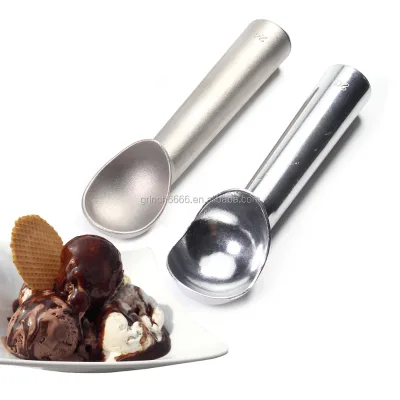
When sourcing an ergonomic rust-resistant ice cream scoop, the primary objective is to identify tools that maintain structural integrity in cold, wet environments while offering superior handling characteristics. The core material composition is the most critical determinant of rust resistance. Based on available market data, stainless steel remains the predominant material for high-performance scoops, offering a robust defense against corrosion compared to standard carbon steels or lower-grade alloys. The supply chain frequently lists "Stainless Steel" as a primary material attribute, ensuring that the tool can withstand repeated exposure to freezing temperatures and moisture without degrading.
However, buyers must exercise caution when interpreting material claims. While stainless steel is the standard, some listings may also feature "Metal" as a generic descriptor or "Plastic" for specific components like handles or scooping mechanisms. For an ergonomic design, the handle geometry is equally vital. The "Ergonomic" aspect often correlates with specific handle colors, such as yellow or silver, which may indicate different grip textures or material blends designed to reduce hand fatigue during high-volume service. The weight of the unit is another observable specification; some products list a specific weight of 345g, which suggests a balanced design that is neither too light to feel flimsy nor too heavy to cause strain.
Dimensions play a significant role in the "ergonomic" classification. Standardized packaging dimensions, such as 26.1cm × 4.9cm × 6.3cm, provide a baseline for the physical footprint of the tool. Buyers should verify that the actual product dimensions align with these specifications to ensure compatibility with existing storage solutions and serving stations. Furthermore, the "Single package size" can vary significantly, with some bulk listings indicating dimensions like 47X22X50 cm, which usually refers to the carton containing multiple units rather than the individual tool. Distinguishing between the single unit size and the bulk packaging size is essential for accurate logistics planning and warehouse space allocation.
Compliance, Certification, and Food Safety Standards
In the B2B food service sector, compliance is not merely a formality but a prerequisite for market entry and operational safety. When sourcing ice cream scoops, buyers must rigorously verify that products meet international food safety standards. The supply data indicates that certain manufacturers hold certifications such as ISO 9001, which validates the quality management systems of the production facility. Additionally, specific food contact certifications like LFGB (German Food Code) and FDA (U.S. Food and Drug Administration) are critical markers for materials that are safe for direct contact with frozen desserts.
The presence of "Amfori BSCI" (Business Social Compliance Initiative) certification is another vital indicator, suggesting that the supplier adheres to ethical labor practices and social responsibility standards. This is particularly relevant for global brands that have strict supply chain due diligence requirements. While the provided data lists these certifications as available attributes for specific models, buyers must confirm that the specific batch or model they intend to purchase carries these valid credentials. Relying on a supplier's general claim without verifying the certificate for the specific SKU can lead to compliance gaps.
Beyond material safety, the "food safe" feature is often explicitly listed as a product attribute. This implies that the metal or plastic components do not leach harmful substances into the ice cream, even under freezing conditions. For products claiming to be "Sustainable" or "Eco-Friendly," buyers should request documentation regarding the lifecycle of the materials, including recyclability and the sourcing of raw materials. The "Non-stick" feature, often associated with specific coatings or surface treatments, also requires verification to ensure it does not compromise the food safety of the utensil. A comprehensive compliance check should include a review of the supplier's test reports for heavy metals, phthalates, and other potential contaminants, ensuring that the product meets the regulatory requirements of the destination market.
Cost Drivers and Pricing Dynamics
The pricing structure for ergonomic ice cream scoops is influenced by a complex interplay of material costs, manufacturing complexity, and order volume. The observed market price range spans from $0.60 to $21.20 USD, a wide variance that reflects differences in material quality, design intricacy, and brand positioning. The lower end of this spectrum typically corresponds to basic stainless steel or plastic models with standard finishes, while the higher end often includes specialized ergonomic designs, premium coatings, or custom branding.
Minimum Order Quantity (MOQ) is a significant cost driver. The data shows an MOQ range from 10 to 5,000 units, with specific listings citing MOQs of 1,000 pieces, 360 pieces, or 500 pieces. Buyers with smaller order volumes may face a higher unit cost due to the fixed setup costs of production lines. Conversely, larger orders can leverage economies of scale to reduce the per-unit price. However, buyers must be wary of inflated MOQs that may not align with their inventory turnover rates. The "Customization" attribute, including logo printing and OEM/ODM support, invariably adds to the cost. Custom molds for specific handle shapes or specialized packaging (such as color boxes or singleOPP bags) will increase the unit price compared to standard off-the-shelf items.
Lead time is another factor that impacts the total cost of ownership. A standard lead time of 30 days is observed in the market, but this can fluctuate based on order complexity and raw material availability. Rush orders or custom designs may extend this timeline, potentially incurring expedited shipping fees. Buyers should also consider the "Packaging" costs; options like "Carton" packing versus "Single" item packing affect the volume efficiency of shipping. Bulk packing in cartons is generally more cost-effective for logistics, whereas single-item packaging is better suited for retail-ready scenarios but incurs higher packaging and handling costs.
Typical Applications and Functional Versatility
Ergonomic ice cream scoops serve a variety of applications beyond simple dessert serving. The primary use case is clearly defined as "Ice Cream Scoops" and "Ice Cream Dishers," designed for portioning frozen desserts with precision. The "Feature" of "Making Ice Cream Ball" indicates a specific mechanical advantage, likely involving a spring-loaded mechanism or a specific blade geometry that creates uniform spheres. This functionality is crucial for professional gelato shops and ice cream parlors where presentation and consistency are paramount.
The versatility of these tools extends to other frozen food applications. Some listings specify "Usage: Non-stick Cookware Special," suggesting that the material properties allow the scoop to be used in conjunction with non-stick surfaces or for handling other frozen ingredients without sticking. The "Ice Cream Sandwich Maker" application highlights a niche use case where the scoop might be part of a larger assembly process. Additionally, the "Flexible" and "Heavy Duty" attributes suggest that these tools can withstand the rigors of commercial kitchens, where they may be used for scooping sorbets, frozen yogurt, or even dense ice creams that require significant force.
The "Handle Color" variations, such as yellow or silver, often serve a functional purpose in high-volume environments. Color-coding allows staff to quickly identify different scoops for different flavors, preventing cross-contamination and ensuring efficiency. The "Round" shape is a standard design for creating uniform scoops, but the ergonomic handle design ensures that the user can apply the necessary force without straining the wrist. Whether used in a high-end restaurant, a street food stall, or a large-scale catering operation, the ability to maintain a consistent scoop size and shape is essential for cost control and customer satisfaction.
Supplier Evaluation and Quality Control Protocols
Selecting the right supplier requires a thorough evaluation of their production capabilities and quality assurance processes. The origin of the products is predominantly "China," with specific manufacturing hubs noted in "Guangdong." This region is known for its robust manufacturing infrastructure, but buyers must verify the specific factory's capacity and reputation. The "Capacity" of 1-10 L mentioned in the data likely refers to the volume of ice cream the tool can handle per scoop or the production capacity of the facility, and it should be clarified to ensure it meets the buyer's operational needs.
Quality control should be a central part of the supplier selection process. Buyers should request samples to test the "Rust Resistant" claims firsthand. This involves exposing the product to moisture and checking for any signs of corrosion after a set period. The "Feature" list often includes "Easy To Clean," which is a critical quality metric for food service equipment. Buyers should test the non-stick properties and the ease of sanitization to ensure the tool meets hygiene standards. The "Single gross weight" of 15.000 kg for a package suggests a heavy-duty build, but the weight of the individual unit should be consistent with the claimed specifications.
When evaluating suppliers, look for those who offer "Customized Logo" services and "Support OEM&ODM." This indicates a level of flexibility and professionalism in their manufacturing process. However, customization should not come at the expense of quality. Buyers should insist on a pre-production sample approval process to ensure that the custom design meets their ergonomic and functional requirements. The "Standard" of 26.1cm × 4.9cm × 6.3cm should be treated as a reference point, and the actual product dimensions should be verified against this standard to ensure consistency across batches.
Long-Term Procurement and Inventory Management
Long-term procurement success depends on establishing a reliable supply chain that can adapt to fluctuating demand. The "Lead Time" of 30 days is a standard benchmark, but buyers should negotiate terms that allow for flexibility in case of supply chain disruptions. Building a relationship with a supplier who can accommodate varying order sizes, from small MOQs of 10 to large orders of 5,000, provides the necessary agility to manage inventory levels effectively.
Inventory management strategies should consider the "Packaging" options. "Carton" packing is ideal for bulk storage and reduces the risk of damage during transit, while "Single" packaging or "OPP" bags may be preferred for retail display or direct-to-consumer sales. The "Selling Units" being listed as "Single item" suggests that the product is often sold individually, which can simplify inventory tracking but may require more frequent reordering.
Sustainability is an increasingly important factor in long-term procurement. Products labeled as "Sustainable" or "Eco-Friendly" align with modern corporate social responsibility goals. Buyers should inquire about the recyclability of the materials and the environmental impact of the packaging. The "Customization" options, including logo printing, can also be leveraged to enhance brand identity and customer loyalty over time. By focusing on high-quality, durable, and compliant products, buyers can reduce the frequency of replacements and ensure a consistent supply of reliable tools for their operations.
Comparative Analysis of Product Attributes
To facilitate decision-making, the following table summarizes key attributes observed in the market for ergonomic ice cream scoops. This comparison highlights the variations in material, packaging, and specifications that buyers should consider.
| Attribute | Observation 1 | Observation 2 | Observation 3 |
|---|---|---|---|
| Material | Stainless Steel | Metal | Plastic |
| MOQ | 1000 PCS | 360 PCS | 500 pieces |
| Packaging | Single / OPP | Plastic Bags / Cartons | Carton |
| Origin | China | Guangdong, China | China |
| Certification | ISO 9001, FDA, LFGB | Amfori BSCI | Food Safe |
| Feature | Making Ice Cream Ball | Flexible, Non-Stick | Sustainable |
| Weight | 345g | 15.000 kg (Gross) | 141g (Standard) |
| Model | SONG047 | GQ-ICS100 | K6940 |
This table illustrates the diversity in the market. Buyers must match these attributes to their specific operational needs. For instance, a high-volume commercial kitchen might prioritize the "Stainless Steel" material and "Carton" packaging for durability and efficiency, while a boutique retailer might prefer the "Plastic" option with "Single" packaging for aesthetic appeal. Understanding these distinctions is crucial for making an informed procurement decision that balances cost, quality, and functionality.
FAQs
What materials are used for ergonomic rust resistant ice cream scoops?
Stainless steel is the primary material used for high-performance scoops to ensure rust resistance. Some listings also feature metal or plastic components for handles, but stainless steel remains the standard for durability in cold environments.
Which certifications ensure food safety for these ice cream tools?
Products often hold ISO 9001, LFGB, FDA, and Amfori BSCI certifications to verify safety and ethical practices. Buyers must confirm that the specific batch carries these credentials to meet regulatory requirements for direct food contact.
How does the MOQ affect the unit price of ice cream scoops?
The minimum order quantity ranges from 10 to 5000 units, influencing the per-unit cost significantly. Lower MOQs may incur higher prices due to setup costs, while larger orders leverage economies of scale to reduce the unit price.
Can suppliers provide customized logos and packaging for these scoops?
Yes, most suppliers support customized logos and offer OEM and ODM services for branding. Packaging options include single OPP bags, color boxes, or cartons, which can increase the unit cost compared to standard off-the-shelf items.
What is the typical lead time for manufacturing these ice cream tools?
A standard lead time of 30 days is observed in the market for production and delivery. This timeline can fluctuate based on order complexity, raw material availability, and whether custom designs or expedited shipping are required.
Which dimensions are standard for the packaging of these scoops?
Standard single package dimensions are often around 26.1cm by 4.9cm by 6.3cm for the tool itself. Bulk packaging may have larger dimensions like 47cm by 22cm by 50cm, which refers to the carton containing multiple units.
What features make these scoops suitable for heavy-duty commercial use?
Features include non-stick surfaces, easy cleaning, and heavy-duty construction to withstand frequent use. The ergonomic design and specific handle colors help reduce hand fatigue during high-volume service in professional kitchens.